
Puzzle Page - Daily Puzzles!
puzzling.comPuzzle
4.39.53K Reviews
- Version
- 7.8.1
- Installs
- 5.00M
- Age Rating
- Everyone
Screenshots
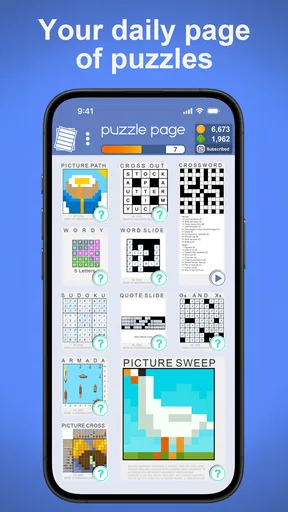
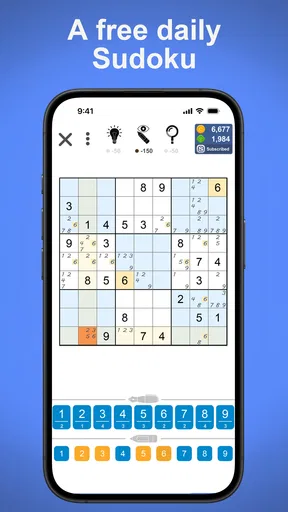
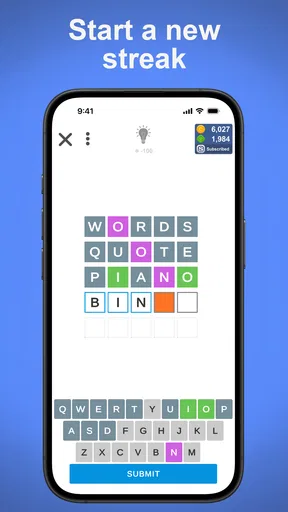
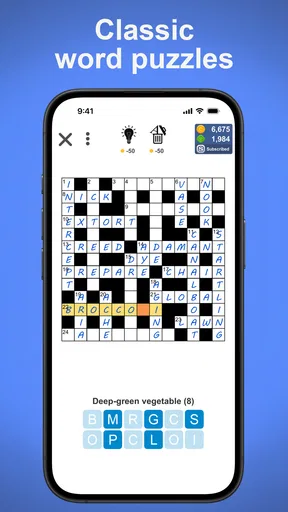
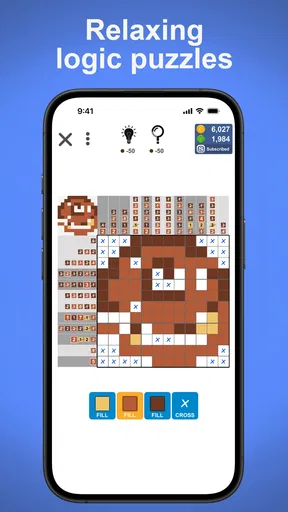
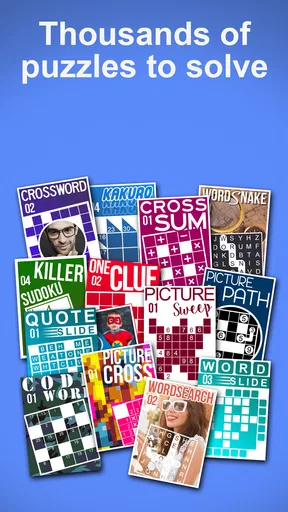
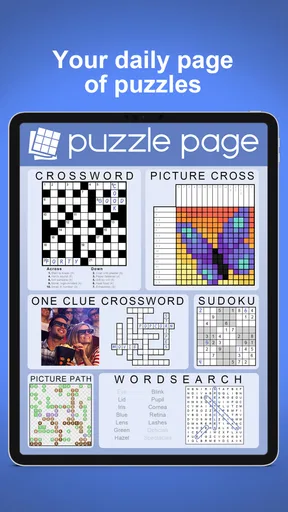
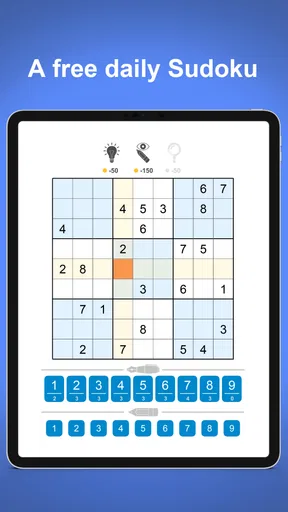
Our Review of Puzzle Page - Daily Puzzles!
 Analysis by Appyee
I came away from Puzzle Page - Daily Puzzles! with the feeling that it understands something many puzzle games miss: a good daily game does not need to be loud, complicated, or endlessly competitive to become part of a routine. This is a free puzzle game from puzzling.com that brings together word, logic, and number challenges in one place. I found it most appealing when I wanted a short mental break rather than a long campaign or a game built around reflexes.
Its main strength is variety with a clear purpose. Instead of asking me to commit to one puzzle style, it lets me move between language-based thinking, deduction, and calculation. That makes it easier to find a suitable challenge depending on my mood. The trade-off is that this broad approach may feel less deep than a specialist app devoted entirely to crosswords, Sudoku, or one particular logic format. For me, though, the mix makes it a useful everyday option, especially when I want something thoughtful without having to search through several separate apps.
How the daily puzzle mix feels in real use
The first thing I noticed is how naturally the game fits into small gaps in the day. I could open it while waiting for an appointment, play a few challenges during a coffee break, or use it as a calmer alternative to scrolling before bed. The puzzles are designed around the idea of returning regularly, so the experience works best when treated as a brief habit rather than a marathon session.
That daily structure gives the game a different rhythm from a traditional puzzle collection. In a large offline puzzle book, I might choose any page and stay with one format for an hour. Here, the attraction is the changing mental task. One moment I may be looking for a word relationship, and the next I may be working through a number or logic problem. That change helps prevent the familiar fatigue that appears when every challenge asks me to use exactly the same skill.
I also like that the three broad puzzle families appeal to different kinds of concentration. Word puzzles reward vocabulary, pattern recognition, and careful reading. Logic puzzles ask me to eliminate possibilities and hold several conditions in mind. Number puzzles are better when I want something more structured and less dependent on language. This makes the game more accessible in a household where different people enjoy different styles, even though it remains a single-player experience.
A realistic example is a short commute. I might begin with a word challenge because it is easy to enter mentally, then switch to a logic puzzle once I have settled in. If I am tired, a number puzzle can feel more manageable because the rules are often easier to keep separate from the rest of the day. That flexibility is more valuable than it sounds: I do not have to abandon the app simply because I am not in the mood for one particular type of thinking.
The game’s store summary describes a fresh selection for every day, and that idea is central to its appeal. I would not choose it expecting a story, character progression, or a large world to explore. I choose it because the puzzle itself is the activity. The simplicity makes it approachable, but it also means the quality of each individual challenge matters more than in a game with many other systems to distract from a weak level.
Why the variety matters more than it first appears
A less obvious benefit is that switching puzzle families can reveal how I solve problems. With word games, I tend to make quick guesses and then correct myself. Logic challenges reward me for slowing down and writing off impossible options mentally. Number puzzles encourage a more methodical approach. Moving between them makes the app feel like a small daily workout for different kinds of attention rather than one repeated exercise.
My practical tip is not to force myself to finish a puzzle when my attention has clearly dropped. Because the game offers different types of challenges, changing categories can be more productive than repeatedly making careless guesses in the same one. A word puzzle that feels irritating after a long day may become enjoyable again after a short number challenge. That is a simple workflow, but it is one of the reasons I found the collection easier to return to than a single-format puzzle app.
Another useful habit is to treat the harder puzzles as deliberate pauses rather than tests of speed. I got more from them when I stopped trying to solve everything immediately. For logic and number problems in particular, taking a moment to identify the rule or constraint before entering an answer reduced random attempts. The app is at its best when I use it to focus, not when I turn it into another source of pressure.
There is also a social use case, even though the game is not something I would describe as a multiplayer title. A family member can look at a puzzle and suggest a different way to approach it, or two people can compare how they interpreted a word clue. Because the formats vary, it is easy for one person to contribute vocabulary while another notices a numerical pattern. That makes it more conversation-friendly than a solitary crossword book, although anyone looking for built-in competitive play should choose a more explicitly social alternative.
Where it stands beside more specialized alternatives
Compared with a dedicated crossword app, this game offers more variety but less commitment to the traditions and depth of crossword solving. Someone who loves long clues, themed grids, and a large archive may feel better served by a specialist. The same applies to a serious Sudoku player who wants advanced difficulty control and a highly focused solving environment. Puzzle Page is better suited to the person who wants several kinds of puzzles without installing a separate app for each one.
It also differs from casual match-three games. Match-three titles are usually built around quick visual decisions, effects, and a stronger sense of continuous progression. This game asks for more deliberate thought and gives me less of that instant, repetitive action. If I want to switch off completely, a simple arcade or matching game may be more relaxing. If I want my short break to involve language, deduction, or calculation, this is the stronger fit.
Against a printed puzzle book, the game is more convenient because it is already on a phone and can offer a changing daily routine. A book still has advantages: it can be used without screen fatigue, it allows me to mark pages freely, and it can feel more satisfying for someone who enjoys handwriting. I would not say the digital format replaces paper for every puzzle fan. It simply makes spontaneous practice easier, particularly when carrying a book is inconvenient.
The game is also less suitable than a formal brain-training product for readers who want detailed performance tracking or a structured course. I see it as a collection for enjoyment and regular mental practice, not as a diagnostic tool. That distinction matters. It can encourage me to think carefully, but I would not use it to draw conclusions about my memory, intelligence, or progress in any scientific sense.
The friction points I would want to know first
The broad selection is also the game’s main limitation. When I enjoy one puzzle family more than the others, I may wish for a deeper stream of that specific format instead of moving through a mixed collection. The variety keeps the experience fresh, but it can make the app feel less satisfying to a specialist who wants increasingly demanding challenges within one narrow discipline.
The daily concept may not suit people who prefer complete control over their schedule. Some puzzle players enjoy opening a large archive and choosing exactly what to solve based on difficulty, theme, or length. A daily selection creates a pleasant routine, but it can feel restrictive if I want a very specific kind of challenge at a particular moment. I would recommend a more customizable puzzle platform to someone who plans sessions in that way.
There is another small trade-off in the free-to-play model. The game is free to install, but optional in-app purchases range from $2.99 to $49.99 per item. That does not make it a poor choice, and I could approach it casually without treating purchases as necessary. Still, anyone who prefers a completely fixed-cost experience should pay attention to the purchase model before settling into a long-term habit. A paid puzzle book or premium specialist app may feel simpler for that audience.
I also would not confuse a large user base with a guarantee that every puzzle will match my taste. The game has an average rating of 4.3 from around 76 thousand ratings, with about 9.5 thousand written reviews, and it has passed 5 million installs. Those figures suggest that the format works for many people, but puzzle preferences are personal. A player who dislikes switching between word, logic, and number challenges may still find it unfocused despite the positive reception.
Because the content is rated for Everyone, I see it as an easy recommendation for mixed-age households. That rating makes it approachable, but it should not be read as a promise that every puzzle will be equally easy for every player. A younger player may enjoy the word and number formats with help, while an experienced adult may want more demanding reasoning. The best experience depends on matching the challenge to the person rather than assuming the age label describes difficulty.
Who will get the most from it
I would recommend this game first to people who want a dependable five-minute puzzle habit. It works particularly well for anyone who enjoys variety, does not need a story, and wants an activity that can be paused naturally. Students may use it as a short break between study blocks, office workers may prefer it to social media during a midday pause, and older players may appreciate having several familiar styles gathered together.
It is also a good choice for someone returning to puzzles after a long gap. A specialist app can feel intimidating if its entire identity is built around expert solving. Here, I can begin with the style that feels most comfortable and gradually spend more time with the others. Starting with number puzzles may help a player who finds wordplay frustrating, while a vocabulary-focused player can use logic challenges as a change of pace.
I would be more cautious about recommending it to competitive players. If the main reason for playing is ranked competition, head-to-head matches, elaborate achievements, or a visible long-term progression system, this is probably not the right destination. Its appeal comes from the act of solving and the regular selection, not from turning every session into a contest.
I would also steer away anyone who wants a completely uninterrupted premium experience. The free entry is convenient, but the presence of optional purchases means the business model is part of the experience. Players who are comfortable ignoring extras should be fine. Those who strongly prefer paying once and removing all commercial considerations may be happier with a premium alternative.
For families, I suggest using it as a shared prompt rather than handing it to a child and assuming the game will teach everything by itself. Talking through why an answer works is more valuable than simply revealing it. This approach turns the word, logic, and number formats into opportunities for reasoning practice without making exaggerated educational claims about the app.
Device expectations and long-term appeal
The current version is 7.8.1, and the game supports devices running Android 8.0 or later. That makes it a practical option for many Android users, although anyone with an older phone should check compatibility before planning around it. I would not choose a phone upgrade solely for this game, but its minimum requirement is reasonable for a modern casual puzzle title.
In the long term, the question is whether the daily selection continues to feel like a welcome ritual. For me, the answer depends on variety. If I approach it with the expectation of a complete puzzle encyclopedia, I may eventually notice the limits of a mixed daily format. If I use it as a compact rotation of mental activities, it has a better chance of remaining useful. The game earns repeat visits through convenience and changing focus rather than through a dramatic progression system.
My best advice is to decide what role I want it to play before installing it. As a replacement for every puzzle app, it may feel too broad. As a companion to a favorite crossword or Sudoku app, it makes more sense. I can use the specialist app when I want depth and open this one when I want a quick change of mental gear. That combination avoids asking one product to satisfy two very different kinds of puzzle player.
After spending time with it, I see Puzzle Page as a friendly generalist with a clear daily purpose. Its strongest evidence is the way the three puzzle families support different moods and attention levels, while its meaningful weakness is that general variety cannot provide the same depth as a dedicated specialist. The free price and Everyone rating make it easy to try, and its established audience shows that the format has broad appeal, but neither point removes the need to consider the purchase model or personal preferences.
My final recommendation is simple: choose it if you want a varied, low-pressure daily puzzle routine, and skip it if you need expert-level depth, competition, or a strictly premium experience. I would happily keep it available for those moments when I want to think for a few minutes without committing to a full game. It is not trying to be a giant adventure or a technical training system, and that restraint is exactly why it works for the right player.
Verdict
Strengths of Puzzle Page - Daily Puzzles!
- Wide variety of daily puzzles keeps the app feeling fresh.
- Includes classic formats such as crosswords, sudoku, and word searches.
- Difficulty options make it suitable for both beginners and experts.
- Offline access lets you play downloaded puzzles without an internet connection.
- Clean layout makes clues, grids, and controls easy to read.
Limitations of Puzzle Page - Daily Puzzles!
- Some puzzles and features may require a paid subscription.
- Daily content can feel repetitive for users seeking unlimited variety.
- Small grid spaces may be uncomfortable on compact phone screens.
- Hints can reduce the challenge and may be limited or restricted.
- The interface may feel dated compared with newer puzzle apps.
Similar Picks in This Category
View All
Block Blast!
HungryStudio4.8

Braindom: Brain Games Test
Lahana Game Studio4.6

AMAZE!
CrazyLabs LTD4.6

Sudoku - Classic Sudoku Puzzle
Oakever Games4.7

Art Puzzle - Puzzle Games
Easybrain4.8

Amaze GO!
Oakever Games4.9
Frequently Asked Questions
What is Puzzle Page - Daily Puzzles!?
Puzzle Page - Daily Puzzles! is a collection of newspaper-style brain games presented in a daily magazine format. It includes familiar challenges such as crosswords, word searches, sudoku, codewords, logic puzzles, number games, and other rotating activities. Each day brings new content, making it suitable for short sessions or longer puzzle-solving breaks. The app also includes access to previous puzzles, depending on the selected version or subscription.
Is Puzzle Page - Daily Puzzles! free to download and play?
The app can generally be downloaded for free, but not every feature or puzzle is necessarily available without restrictions. Free users may receive selected daily puzzles, while additional content, archive access, or an ad-free experience can require a subscription or in-app purchase. Before subscribing, check the pricing, trial period, billing frequency, and cancellation conditions shown in your regional App Store or Google Play listing.
What types of puzzles are included in the app?
Puzzle Page offers a broad variety of puzzle formats rather than focusing on only one type of game. Depending on the current edition, you may find crosswords, cryptic or standard word clues, sudoku, word searches, codewords, picture puzzles, number challenges, and logic-based activities. This variety is one of its main strengths, although some puzzles may feel more appealing than others depending on your experience and personal preferences.
Can I play Puzzle Page - Daily Puzzles! offline?
Many puzzles that have already been downloaded can usually be played without a continuous internet connection, which is convenient for travel or areas with unreliable service. However, the app may need to connect periodically to download new daily editions, verify subscriptions, synchronize progress, or display account-related information. For the smoothest experience, open the app while connected before going offline and make sure the latest puzzle content has loaded.
Is Puzzle Page - Daily Puzzles! suitable for beginners?
Yes, the app is generally approachable for beginners because it offers several puzzle categories with different difficulty levels and play styles. New players can start with simpler sudoku, word searches, or basic number puzzles before trying more demanding crosswords and logic challenges. Some activities may still require familiarity with common puzzle conventions, but the wide selection makes it easy to find a comfortable starting point and gradually improve.
Play our best games!


